Basset Hound: temperament, training and care
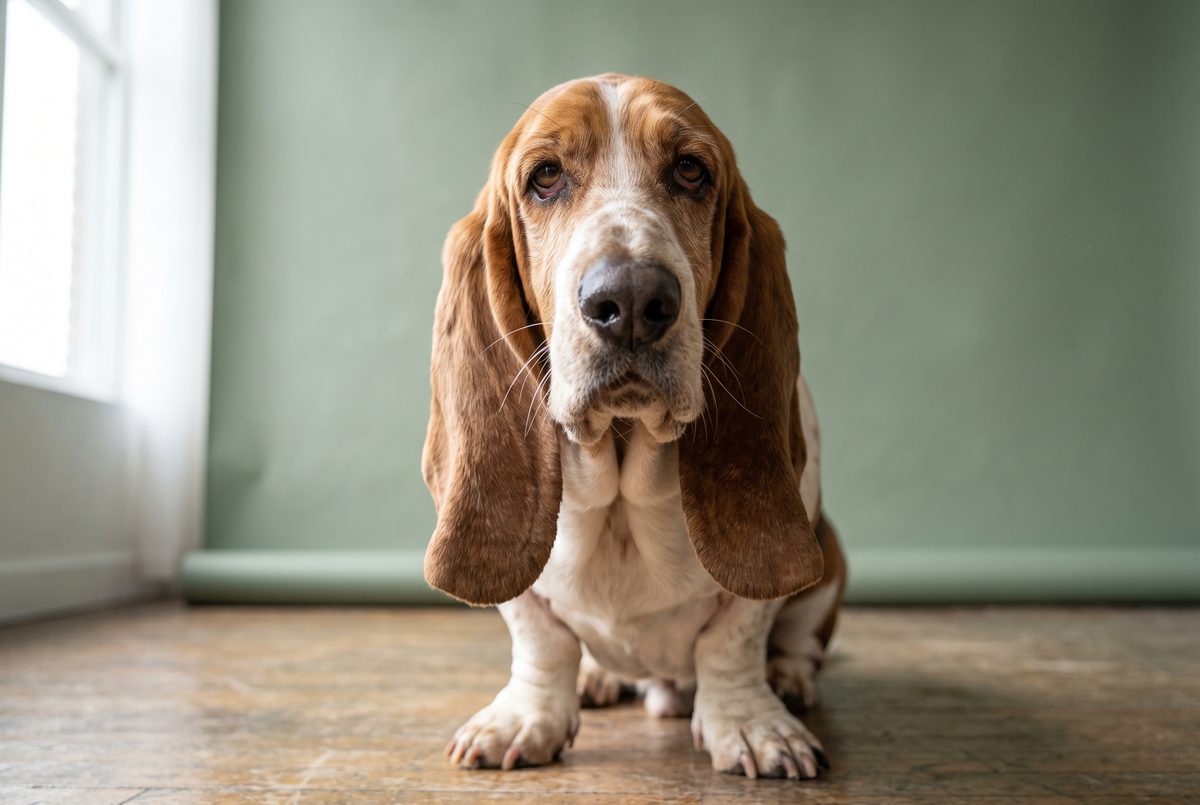
The Basset Hound is a low, heavy-boned dog with long, droopy ears, loose skin and soulful eyes. It comes from France, where bassets hunted hares in packs, and the breed took its modern shape mainly in Great Britain. It stands only about 33 to 38 centimeters (13 to 15 inches) at the shoulder but weighs roughly 20 to 30 kilograms (45 to 65 pounds), so it is a big dog on short legs. Few breeds can match its nose.
Temperament
The Basset is calm, gentle and friendly with people and other animals. At home it is easygoing and loves to rest, but outdoors it turns into a determined tracker that follows every scent. It is independent and can be stubborn, because it was bred to make its own decisions on the hunt. Its deep, loud voice is typical. When something catches its interest or it gets bored, you will hear it, and in an apartment building the neighbors may not be thrilled.
Life with kids
★★★★
Basset Hounds usually get along wonderfully with children. They are patient, easygoing and enjoy being petted. Kids shouldn’t lift the dog or pull its ears, though, because it has a long back and is heavier than it looks. The breed can suit families with younger children too, as long as adults make sure the rules are followed.
Training and socialization
The Basset Hound is smart but only listens when it sees the point. Patience, short sessions and treats work best, since food is a strong motivator. Because of its powerful nose, recall tends to be unreliable, so keep it on a leash outside fenced areas. If its voice starts to bother you, see our guide on how to stop a dog barking.
Exercise and energy
A Basset is no running partner, but it does need daily exercise: around an hour of walking split into two or three outings. It enjoys a relaxed pace with plenty of time to sniff. Regular exercise also matters for its weight, because Bassets gain weight easily. Avoid jumping and lots of running up and down stairs, which strains the back. More on daily exercise in how much exercise does a dog need.
Health and care
The short coat only needs brushing once a week, but Bassets do shed and have a noticeable doggy smell. The ears need more attention: they are long and poorly ventilated, so check and clean them about once a week to prevent infections. Keep an eye on skin folds and eyes too, as eyelid problems and glaucoma occur in the breed. The long back and short legs raise the risk of spine and joint problems, and excess weight makes them worse. As a deep-chested dog it is also at risk of bloat, so feed several smaller meals a day and let it rest after eating. Life expectancy is usually 10 to 12 years.
Who the Basset Hound suits
The Basset suits calmer people and families who want a friendly companion for daily walks rather than sports. It thrives with a patient owner with a sense of humor who won’t be thrown by its stubborn streak. It can live in an apartment if its voice isn’t a problem and there aren’t many stairs to climb every day. It is a poorer fit for people who want an off-leash or jogging dog.
Find more breeds in our dog breed dictionary; the Beagle is a similarly nose-driven hound, and the Dachshund shares the long back and short legs.
Could you handle the daily walks a Basset Hound needs?
TestDog simulates real dog care: feeding, walks and exercise measured by your pedometer in real time. A Basset Hound doesn’t need a marathon, but it does need regular walks and a close eye on its weight. Find out if you can manage it before you get a real dog.