Dalmatian: Temperament, Exercise Needs, and Care
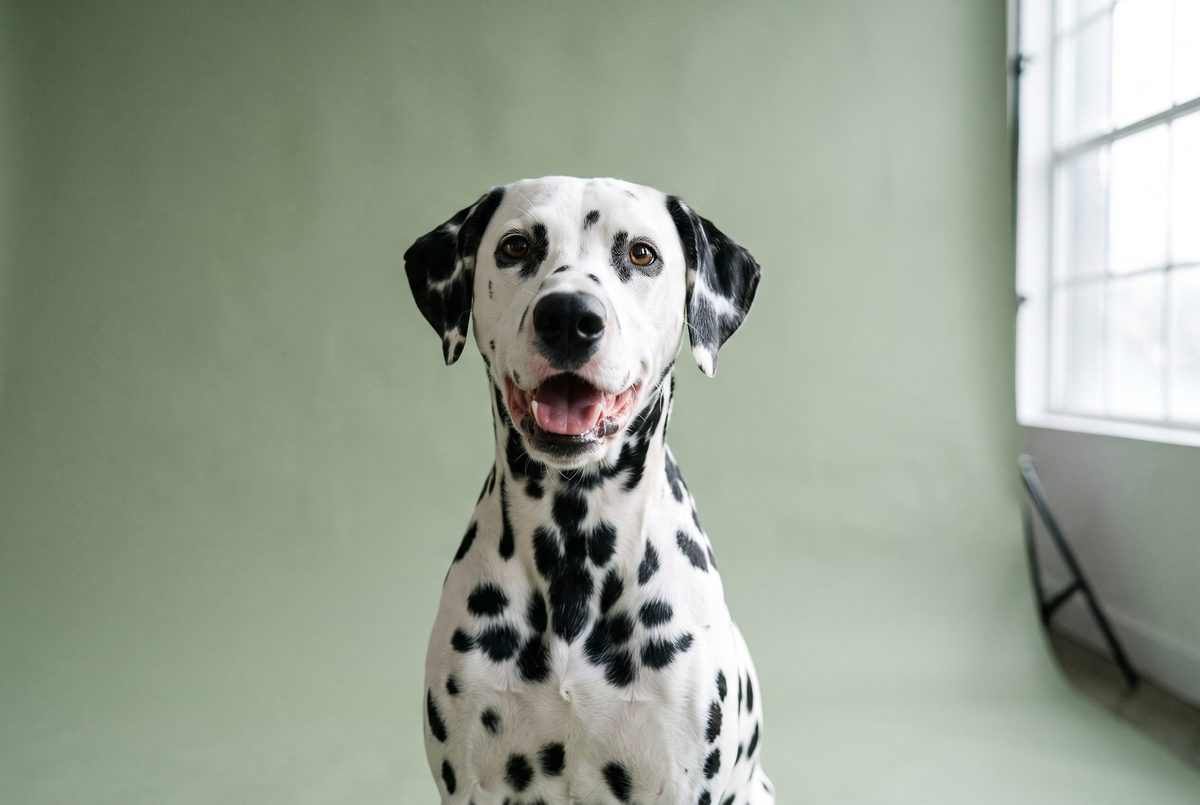
The Dalmatian is a medium to large dog with a short white coat covered in black or liver spots. The breed is named after Dalmatia in Croatia, but it became famous mainly in England, where it ran alongside carriages and guarded horses and stables. It stands roughly 54 to 61 centimeters at the shoulder and weighs about 24 to 32 kilograms. A fun fact: puppies are born completely white, and the spots only appear during the first weeks.
Temperament
The Dalmatian is friendly, playful, and very affectionate with its family. It is tireless, intelligent, and sensitive, and responds poorly to harsh handling. With strangers it tends to be polite, sometimes a little reserved, and it makes a good watchdog. Without enough exercise and mental work it gets bored quickly, and boredom shows up as restlessness, barking, or chewing.
Life with kids
★★★
Dalmatians usually get along well with children and love to play with them. But they are lively and strong, so an excited Dalmatian can easily knock over a small child. The breed suits families with older kids who can follow rules and enjoy active outdoor play. Children should learn not to wake the dog with a sudden touch, which matters twice as much for dogs with reduced hearing.
Training and socialization
Dalmatians learn quickly but can be stubborn and soon tire of repetition. Positive reinforcement, short and varied sessions, and consistency from day one work best. Early socialization with people, dogs, and different environments is important for a well-balanced adult. Because of its energy and strength, it pays to practice loose leash walking from puppyhood; we explain how in how to stop a dog pulling on the leash.
Exercise and energy
This is one of the most enduring breeds. A Dalmatian needs at least two hours of exercise a day, ideally a mix of long walks, off-leash running, and play. An adult dog is a great partner for running, cycling, or hiking, but wait with demanding sports until a puppy's bones and joints are fully grown. It only suits apartment life with very active owners who provide exercise every single day. More on daily exercise in how much exercise does a dog need.
Health and care
The short coat looks low-maintenance, but Dalmatians shed all year round and their hairs weave into fabric. Brushing with a rubber grooming mitt once or twice a week helps. The breed has two typical health quirks. Some dogs are born deaf in one or both ears, so ask the breeder for hearing test (BAER) results. Dalmatians also process uric acid differently and are prone to urinary stones, so they need plenty of fresh water, frequent bathroom breaks, and a diet moderate in purines; talk to your vet about it. Life expectancy is usually 11 to 13 years.
Who the Dalmatian suits
The Dalmatian suits active people and families who spend a lot of time outdoors and want a sporty companion. It thrives with a patient, consistent owner. For people short on time or without a chance for daily exercise, it is a demanding choice, as it is for first-time owners who aren't willing to learn. Its short coat makes it sensitive to frost, so in winter it shouldn't stand around outside for long.
Find more breeds in our dog breed dictionary; the Vizsla and the Border Collie are similarly energetic.
Could you handle the daily exercise a Dalmatian needs?
TestDog simulates real dog care: feeding, walks, and exercise measured by your pedometer, all in real time. It lets you test whether you can keep up the regular walks a tireless Dalmatian needs before you bring home a real dog.