Rottweiler: temperament, care and good with kids
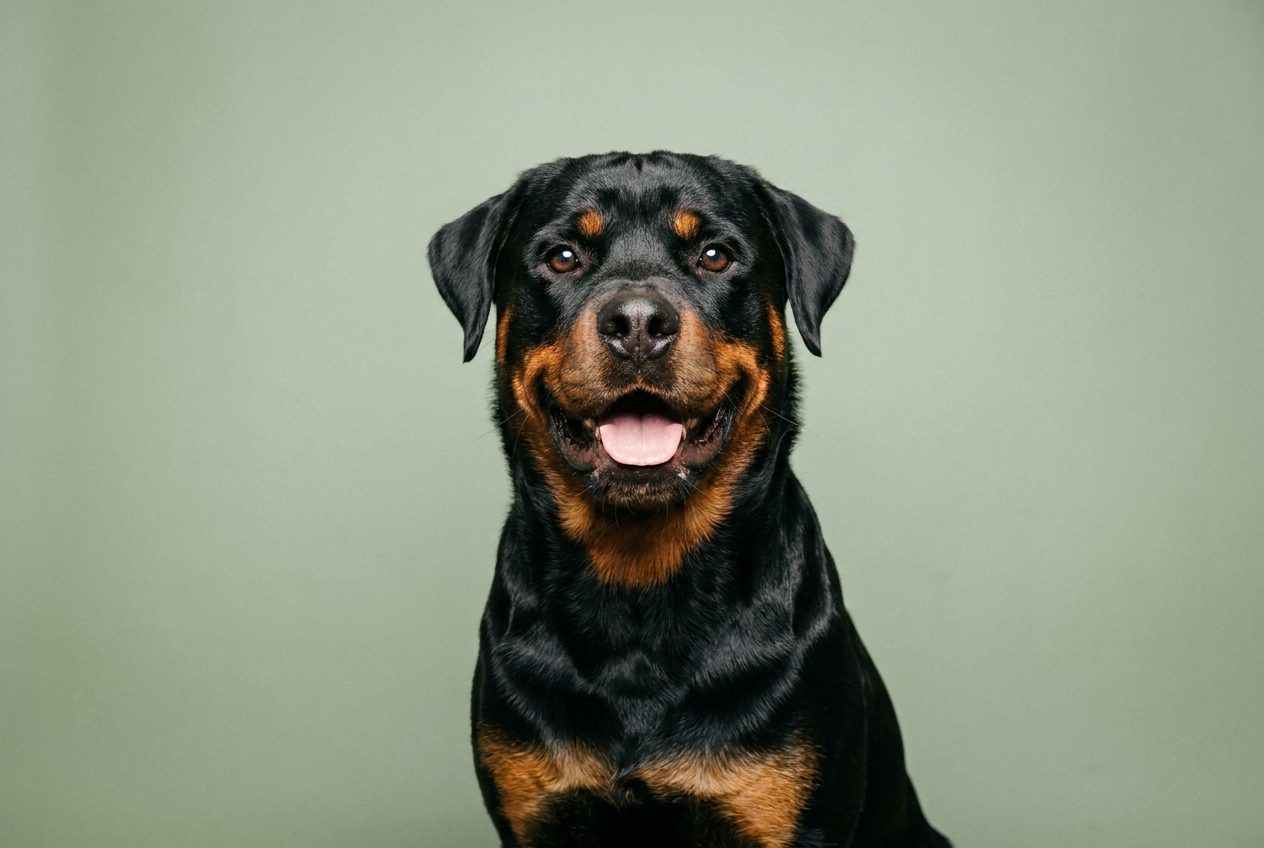
The Rottweiler is a powerful German breed, originally bred as a herding and cart-pulling dog and now known mainly as a devoted family guardian. It typically weighs 35–60 kg, with males noticeably heavier than females, and beneath its calm exterior hides a confidence and strength that need to be factored in from day one of training.
Temperament
Rottweilers are calm, self-assured, and deeply devoted to their family, while staying reserved or wary with strangers, which makes them natural watchdogs. A well-led, well-socialized Rottweiler is a steady, predictable dog; without consistent training and early exposure to people and other dogs, it can become pushy or distrustful. The breed's intelligence means it learns fast, but it also picks up bad habits just as fast if the owner isn't consistent.
Good with children
★★★
Rottweilers raised alongside children are usually patient and protective with them, but their size and strength mean play with small kids always needs supervision. The breed isn't a good fit for a first-time dog owner with no training experience; socialization from puppyhood is a requirement for a Rottweiler, not an optional extra.
Grooming & care
The short double coat needs little upkeep beyond a weekly brushing, more often during shedding season. The real demand of this breed isn't the coat, it's consistency in training: a Rottweiler needs clear rules and a confident handler from a young age, or its size and self-assurance can end up working against the owner.
Exercise & daily routine
A Rottweiler needs 1 to 1.5 hours of active exercise a day, combining walks, obedience training and mental stimulation. Without enough of an outlet for its energy and mind, it tends toward weight gain and boredom that shows up as destructive behavior. It suits training sports like obedience or weight pulling, not just free time in the backyard.
Who is the Rottweiler right for?
The Rottweiler suits experienced dog owners who can commit to consistent training and socialization, and families with a house and yard of their own. It's a poor match as a first dog, for a small apartment without room for regular training, or for a household that can't give it hours of attention every day.
Compare it with other strong, powerful breeds in our breed guide, and read more about exercise needs in general in how much exercise does a dog need.
Can you handle the daily routine?
TestDog simulates the real routine of caring for a virtual dog — feeding windows and walks tracked by step count. Try it before you commit to a Rottweiler or any other demanding breed.