White Swiss Shepherd: temperament, training and care
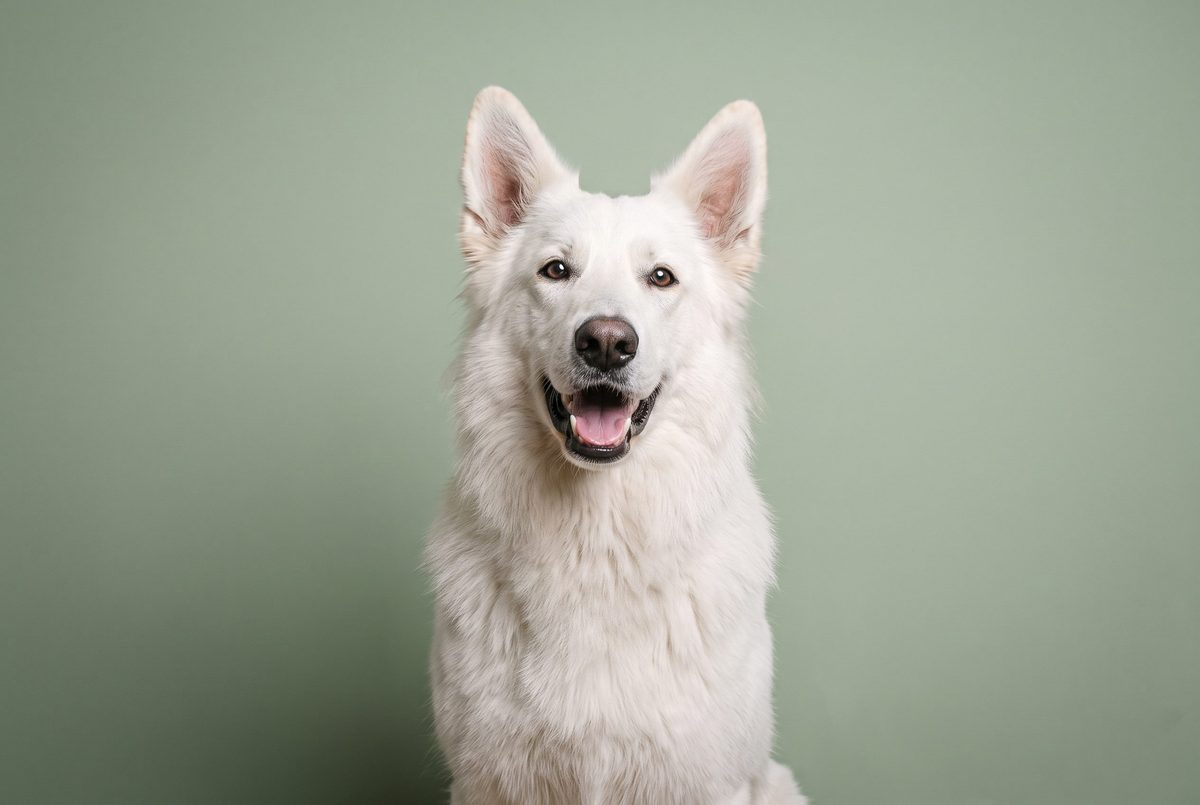
The White Swiss Shepherd, also known as the Berger Blanc Suisse, is a large, elegant dog with upright ears and a snow-white coat. Its ancestors are white German Shepherds. When white was excluded from the German Shepherd standard in Germany, these dogs were bred mainly in the United States and Canada. From there they made their way to Switzerland, where they became a separate breed, recognized by the international kennel federation FCI in 2011. Males stand about 58 to 66 cm (23 to 26 inches) at the shoulder and weigh roughly 30 to 40 kg (65 to 90 lb); females are smaller.
Temperament
Compared with its relative, the German Shepherd, it has a gentler, softer personality. It is friendly, attentive and deeply attached to its family. It tends to be reserved with strangers at first, but not aggressive. It will announce visitors and guards with its voice rather than by attacking. It is sensitive to the mood at home and doesn't cope well with shouting and arguments. It dislikes being left alone for long and wants to be part of family life.
Life with kids
★★★★
With children it grows up with, it usually gets along very well. It is patient and playful, but its size and energy mean it can knock over a small child by accident. It suits families with older kids best, or homes where adults supervise play and the dog has a quiet spot to retreat to.
Training and socialization
The White Swiss Shepherd is smart and eager to work with you, so it learns quickly. Positive reinforcement, praise and play work best. Harsh handling makes it insecure and withdrawn. Early socialization is important: a puppy should meet different people, dogs, sounds and places so it doesn't grow up fearful. It does well in obedience, agility, tracking and therapy work.
Exercise and energy
As a herding dog, it needs plenty of exercise, about an hour and a half to two hours a day, plus mental work. Long walks, running, hiking and dog sports are ideal. When it's bored, it will find its own entertainment, often destructive. Our guide on how to leave a dog home alone explains how to help it cope with time on its own.
Health and care
The coat can be short or long, always with a dense undercoat. Brush it once or twice a week, and daily during shedding season, typically in spring and fall. Dried dirt usually brushes out of the white coat, so baths are only needed occasionally. The breed can be affected by hip and elbow dysplasia, so choose a breeder who health-tests the parents. Some dogs carry the MDR1 gene mutation, which makes them sensitive to certain medications, so let your vet know. As a large, deep-chested dog, it is also at risk of bloat (gastric torsion). Life expectancy is usually 12 to 14 years.
Who the White Swiss Shepherd suits
It suits active people and families who have time for daily exercise, training and companionship. A house with a yard is ideal, but it can manage in an apartment if it gets enough exercise outdoors. It's a poor match for people who are away most of the day or anyone who minds dog hair everywhere.
Browse more breeds in our dog breed guide. The Samoyed is another friendly white dog, and the Border Collie shares its herding drive.
Could you handle the daily exercise a White Swiss Shepherd needs?
TestDog simulates real dog care: feeding, walks and activity measured by your pedometer in real time. A White Swiss Shepherd needs long walks and company every day. See whether you can keep it up before you get a real dog.