Whippet: temperament, training and care
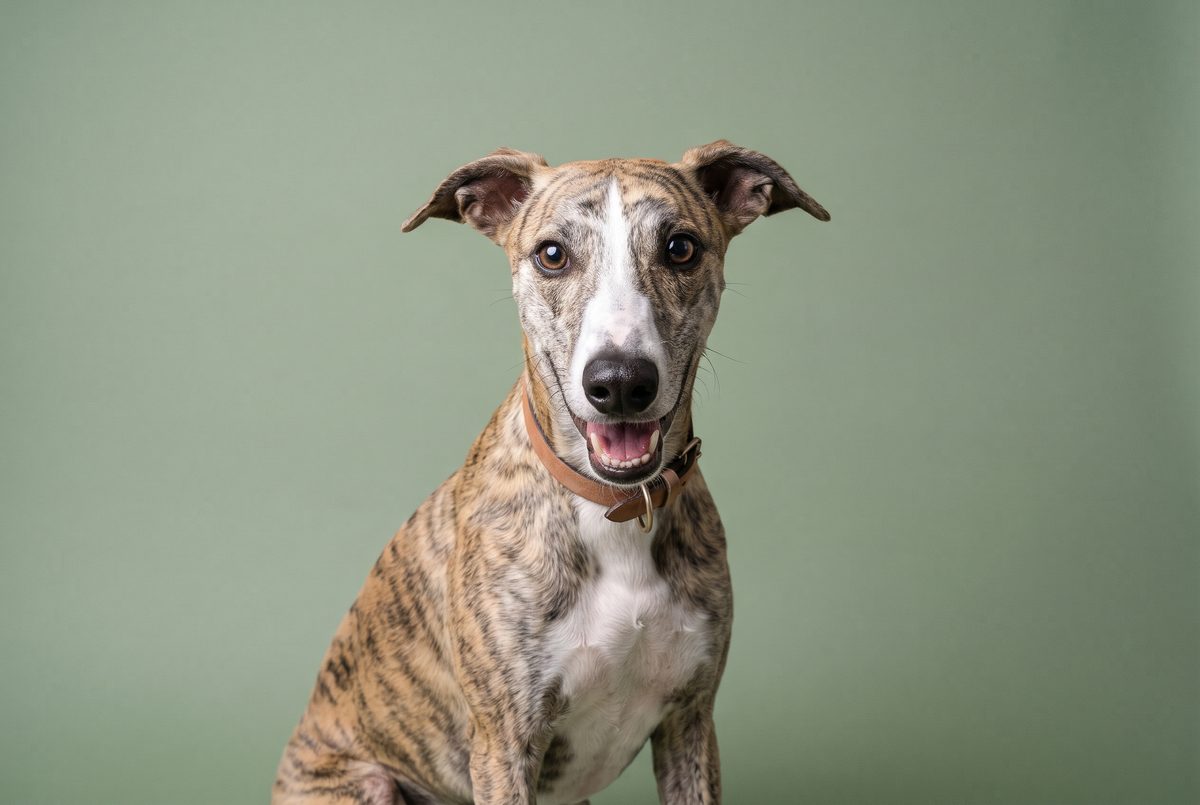
The Whippet is a medium-sized English sighthound. It was developed in the 19th century in northern England, where working-class families used it to hunt rabbits and for racing. It looks like a smaller Greyhound: a slim body, long legs, a narrow head and a short, fine coat in many colors. It stands about 17 to 20 inches at the shoulder and usually weighs 20 to 35 pounds. It's one of the fastest dogs there is and can top 30 mph over short distances.
Temperament
Indoors, the Whippet is surprisingly calm. It loves to sleep, ideally under a blanket or on the couch, and it's very affectionate with its family. It barks little and tends to be reserved with strangers without being aggressive, so it won't make a guard dog. It's sensitive and doesn't cope well with shouting or rough handling. Outdoors, though, the hunter wakes up: the moment it spots a running rabbit, cat or squirrel, it's gone, and at that point it often won't hear you.
Good with kids?
★★★★
It gets along wonderfully with children who treat it gently. It's soft, patient and loves to cuddle. It doesn't enjoy rough play, though, and it's too delicate and sensitive for pulling and squeezing. That makes it a better fit for families with school-age kids who understand that a dog also needs quiet time. It can live with a cat if raised with one, but it sees unfamiliar animals outdoors as prey.
Training and socialization
The Whippet is smart, but it isn't a dog that obeys just because you want it to. Short sessions, lots of praise and treats work best. Pressure makes it shut down. The biggest challenge is recall: because of its strong prey drive, only let it off leash in a fenced area until its recall is truly reliable, and stay careful even then. We explain how in how to teach a dog basic commands. Introduce your puppy to people, dogs and city noise early so it doesn't grow up fearful.
Exercise and energy
A Whippet needs roughly an hour to an hour and a half of activity a day, but above all a chance to really run. Ideally it gets a few weekly sprints in a fenced field, lure coursing (chasing an artificial lure) or sighthound racing. Once it has run, it's pleasantly calm at home, which is why it also does well in an apartment. More in best apartment dogs. With almost no body fat and a thin coat, it needs a jacket in winter and rain and a warm bed indoors.
Health and care
The short coat hardly smells and grooming is easy: a weekly once-over with a rubber mitt is enough. Whippets don't shed heavily, but they do lose some hair. Their thin skin is easily scraped or torn on branches and barbed wire. Overall it's a healthy breed with a lifespan of 12 to 15 years. Heart and eye conditions do occur, so choose a breeder who health-tests the parents. Sighthounds have little body fat and can be more sensitive to some anesthetics, so remind your vet before any procedure.
Who is the Whippet for?
It suits people who want a calm, affectionate companion for an apartment or a house and are willing to give it regular runs in a safe space. It's a poor fit for owners who want to let their dog off leash everywhere, for families with very young and boisterous kids, and for anyone looking for a guard dog.
Find more breeds in our dog breed guide. Similarly athletic but more eager to please is the Vizsla, while the Dalmatian is a runner with more stamina. For how much activity each breed needs, see how much exercise does a dog need.
Could you handle the care a Whippet needs?
TestDog simulates real dog care: feeding, walks and activity tracked by your phone's pedometer in real time. A Whippet needs daily walks, a steady routine and plenty of your company. Find out if you can handle it before you get a real dog.